
A seven course meal centred entirely around mangoes is not the most obvious place to find inspiration for a wildlife photography exhibition. But then again, I have always found that the most interesting possibilities reveal themselves when you look at something beyond what it was originally intended to be.
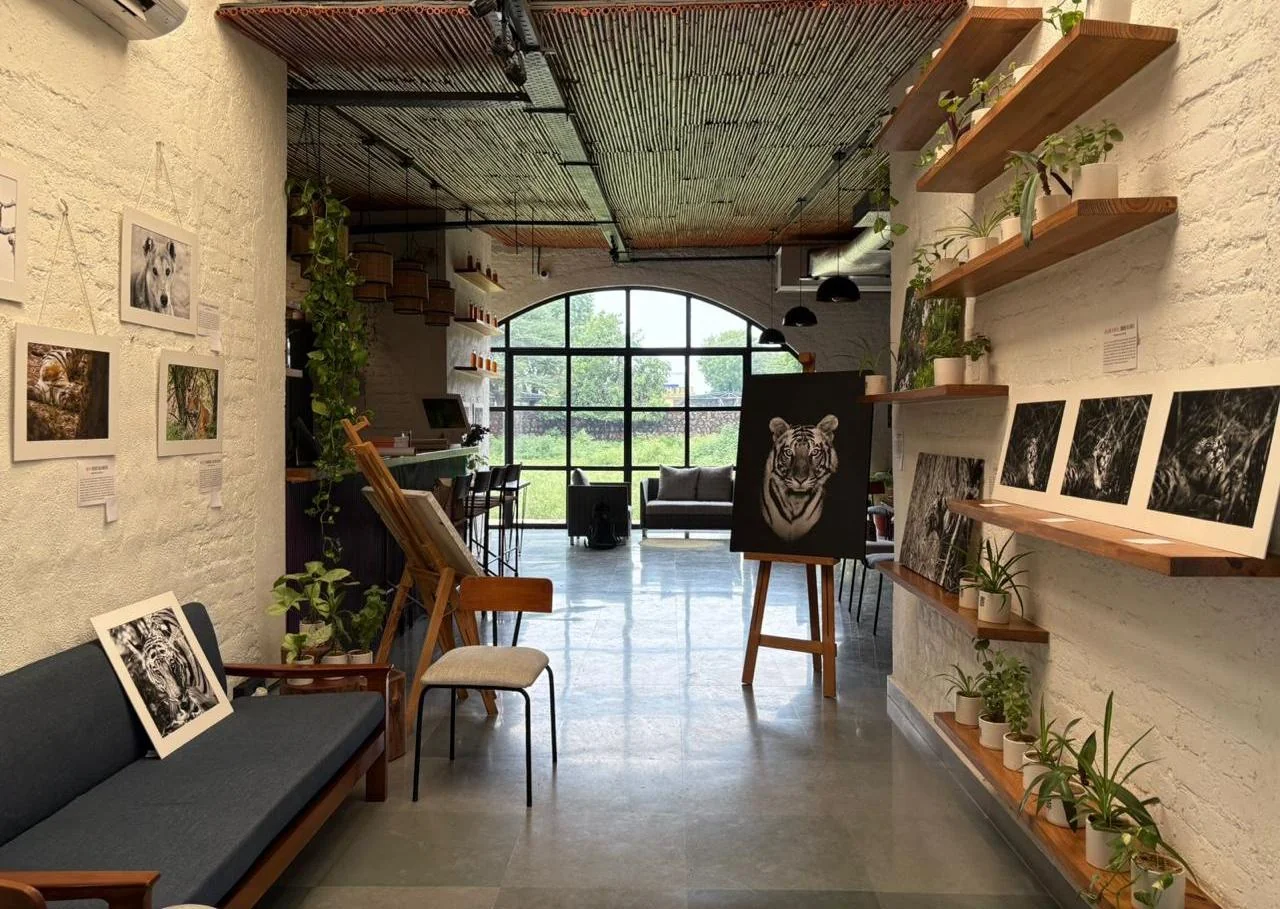
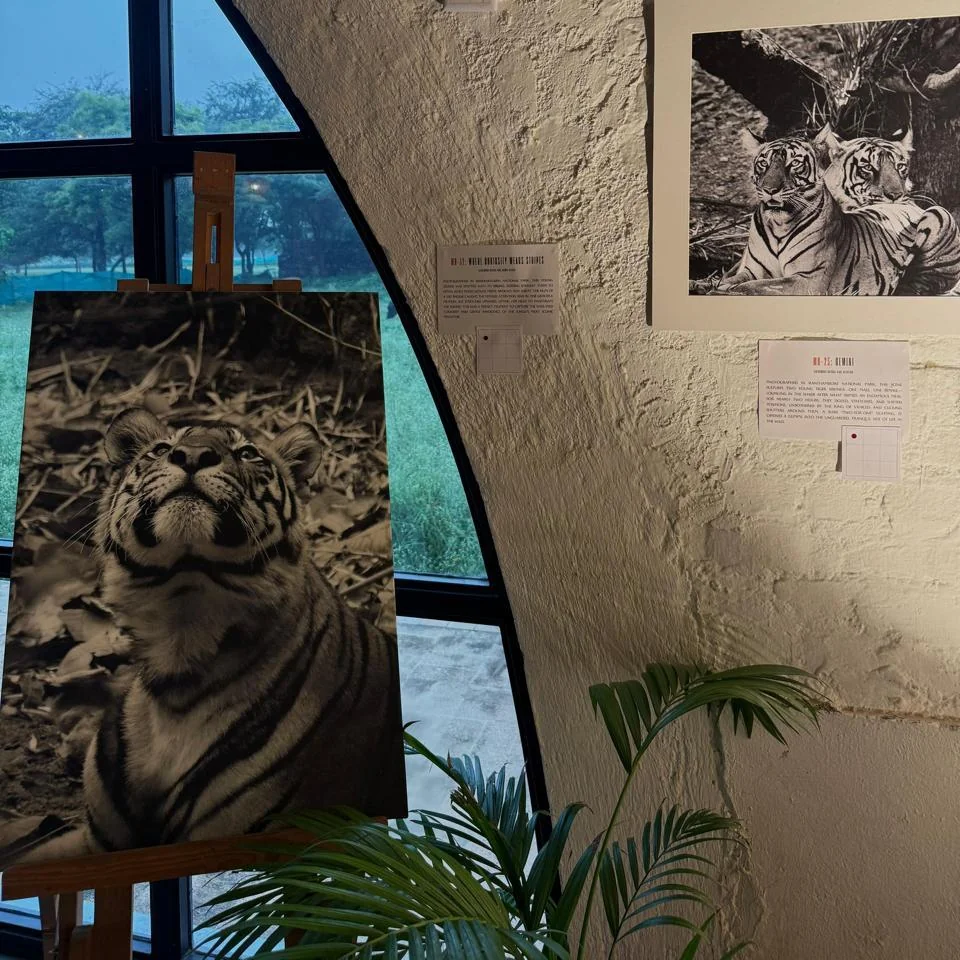
I was at Indica in Delhi with my daughter, Mohina, for one of their culinary experiences when I began looking at the space differently. There was a large semicircular window opening onto fields outside, an intimate room filled with character, and a venue already accustomed to transforming itself for different experiences.
Mohina had been searching for somewhere to exhibit her wildlife photography. Traditional galleries weren’t quite working for what we had in mind. The Inked Wild was going to be an independently funded, one day exhibition, and we needed somewhere that would allow people to linger, move around and experience the photographs without the setting overwhelming them.
Indica wasn’t an exhibition space.
But standing there, I could already imagine it becoming one.
Mohina’s fascination with wildlife has taken her through forests in India, Sri Lanka and beyond, photographing animals in the environments they belong to.
What interests her isn’t simply the sighting. It is everything you begin to notice when you stay long enough to observe.
The stripes that allow a tiger to disappear into its surroundings. The markings of a leopard. A peacock displaying its feathers. A mother feeding her young. Nature is full of details that appear extraordinarily beautiful to us but serve very real purposes in the lives of the animals themselves.
That thinking became an important part of The Inked Wild.
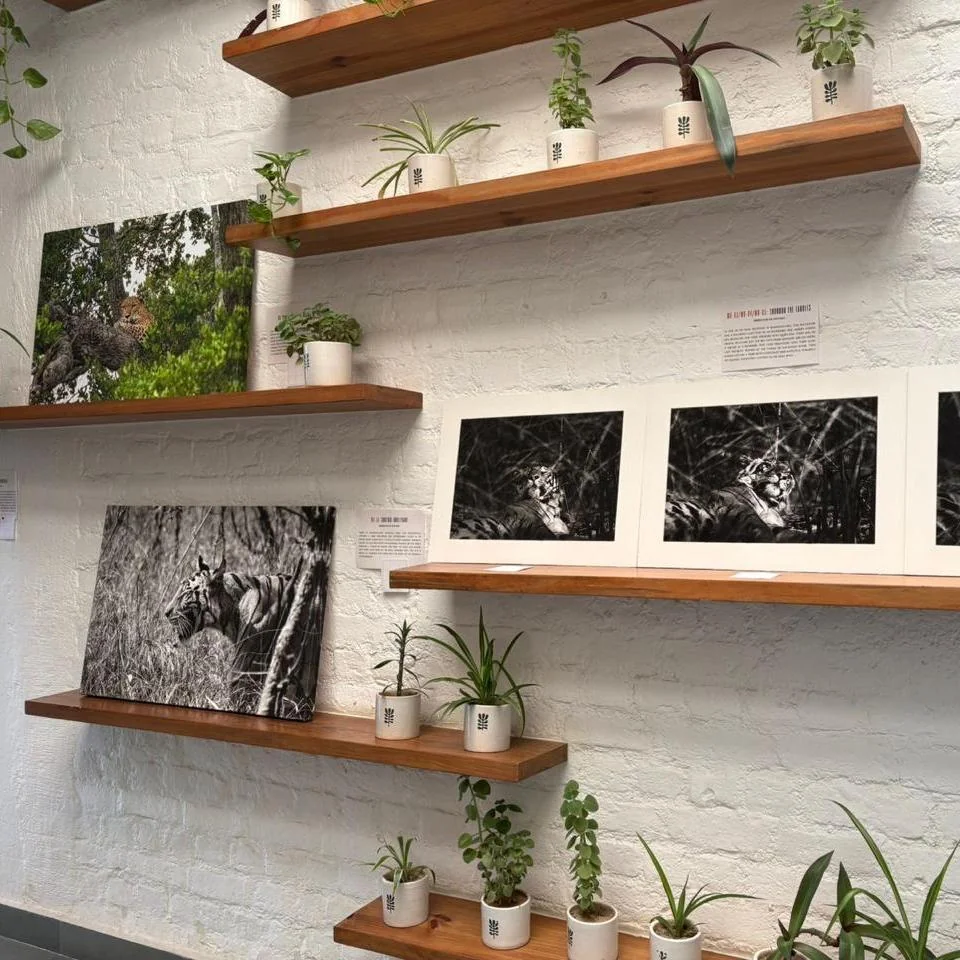
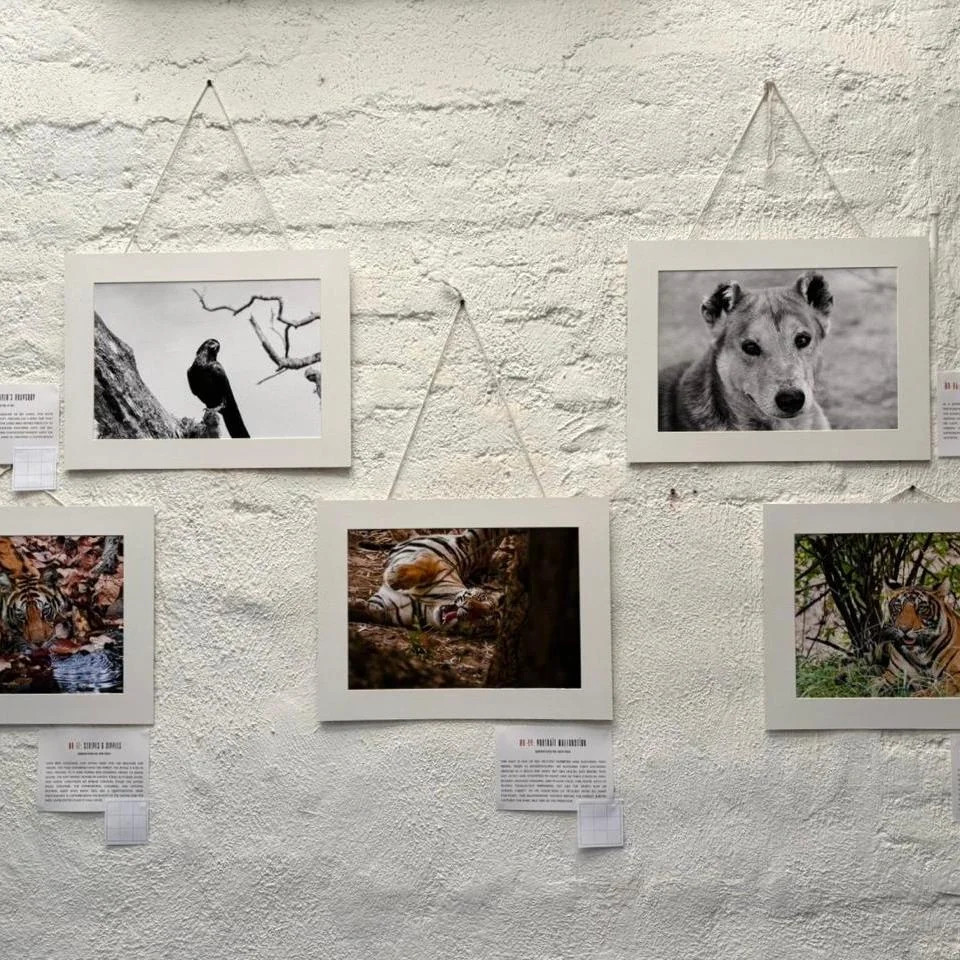
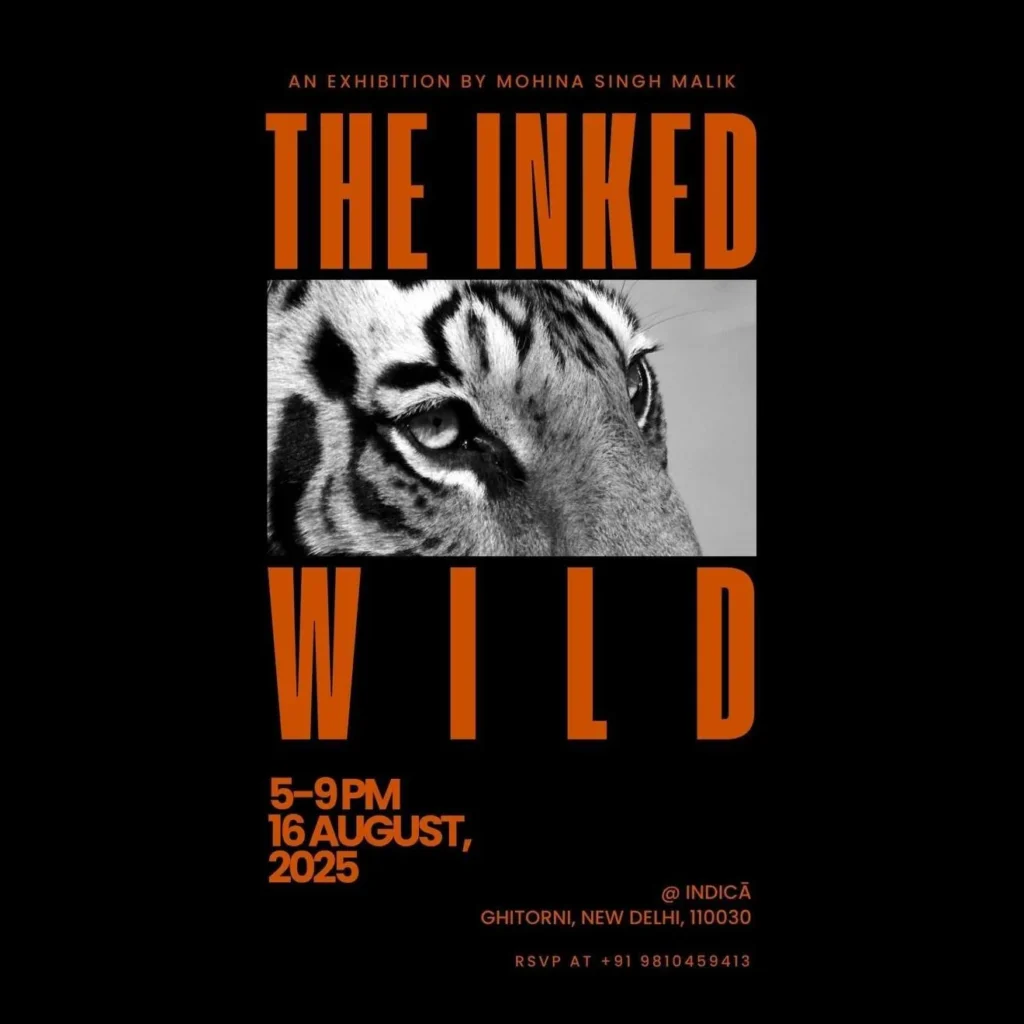
The exhibition, held on the 16 August 2025, brought together approximately 35 photographs, most rendered in black and white. Taking colour away from many of the images allowed pattern, texture, light and shadow to become more pronounced. A stripe became a composition. An expression became more arresting. Details that might have disappeared amongst the colours of a forest suddenly demanded attention.
Colour remained in selected photographs where it was integral to the image. There was no rule simply for the sake of consistency. The treatment followed the photograph.
Mohina had created the visual language. My responsibility was to find a way for the space to speak it.
I have always believed that designing a space begins with understanding what is already there.
Indica had its own personality, and I didn’t want to erase it to imitate a conventional gallery. Instead, I began looking for opportunities within it.
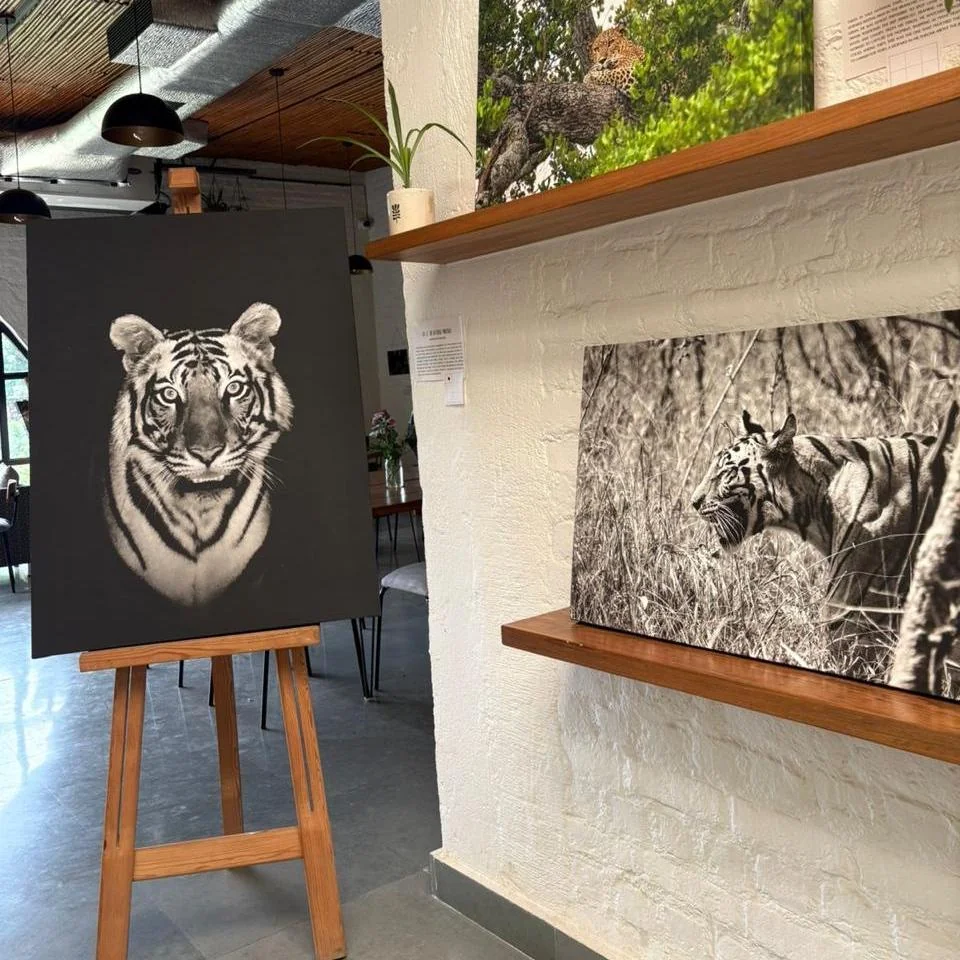
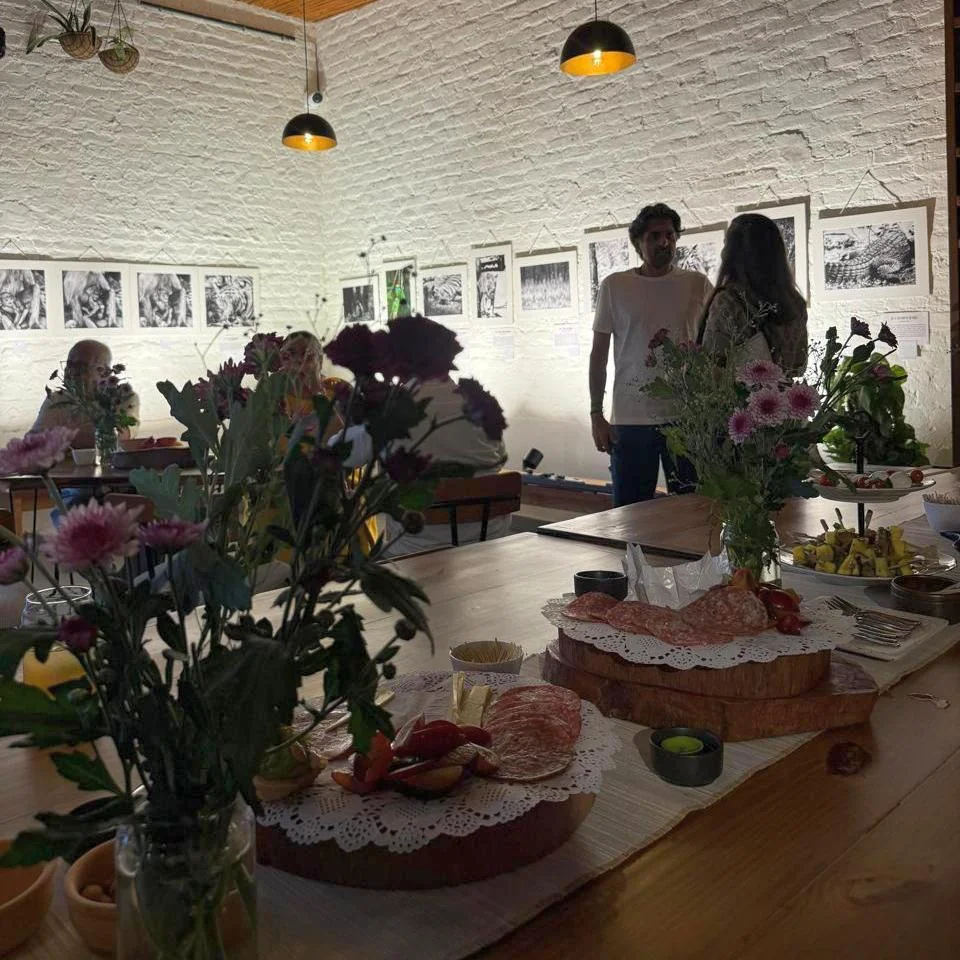
The large window connected the room to the landscape outside. Existing furniture and decorative pieces gave us places to integrate photographs in unexpected ways. We brought in plants selectively, strengthening the relationship with nature without turning the room into a literal interpretation of the exhibition.
Lighting required more intervention. The existing scheme had been designed for dining, so additional lighting was brought in and positioned to reveal the contrast, depth and detail of the photographs.
Then came the placement.
I considered what someone would see on entering, where their eye would travel next and which photographs needed space around them. Some pieces commanded walls of their own. Others slipped almost seamlessly into the existing décor.
I didn’t want visitors to feel as though photographs had simply been placed around a room. I wanted them to feel that, for that evening, they belonged there.
The exhibition wasn’t only about what happened on the walls.
Indica has a strong culinary identity, and rather than working against it, we made hospitality part of the experience. We worked closely with the team on the food and drinks, while charcuterie boards, flowers, tableware and serving areas were composed with the same attention as the rest of the setting.
There also had to be room for people. We were expecting around 70 to 80 guests, so the space needed to work not only as an exhibition but as a place where people could wander, pause over a photograph, have a conversation and return to something that had caught their attention.
The guest list brought together friends and family alongside people with a genuine interest in wildlife, photography and conservation. The photographs were also available for purchase, which meant working through printing, pricing and the possibility of producing additional prints.
Each decision was relatively small. Together, they determined how the evening would feel.
Then, the day before the exhibition, Mohina fell ill with a high fever.
She couldn’t be at Indica for the final installation.
By then, though, we had spoken about the exhibition enough for me to understand what mattered to her. I knew the collection, the mood she wanted and the way she hoped people would experience her work.
So I took over the final curation.
Photographs moved. Lighting was adjusted. Certain pieces found unexpected positions within the room. I made decisions based on the conversations we had already had, but also on what the space was telling me once everything began coming together.
It was a strangely familiar position to be in.
A client rarely hands you a complete answer. They give you preferences, requirements, ideas and feelings. My job is to listen closely enough to understand the intention behind them, and then use my own experience to translate that intention into something tangible.
This time, my client happened to be my daughter.
On 16 August, the room no longer felt like a borrowed venue.
The photographs began at the entrance and unfolded throughout the space. Around 70 to 80 guests moved between them, stopped over food and drinks, returned to pieces they wanted another look at and spent the evening talking about wildlife and photography. Several works found new homes.
But what stayed with me was how naturally the collection settled into a space that had never been designed to exhibit art.
That, for me, became the story behind The Inked Wild.
Mohina’s photographs ask us to look more closely at things that already exist. To notice a pattern, a behaviour or a detail in nature that we might otherwise pass over.
Curating the exhibition required much the same instinct.
The right space was already there. Its character was already there. Many of the elements we eventually used were already there.
They simply needed to be seen differently.